Sample Approval for Hotel Umbrellas: How to Protect Your Opening Date
- Share
- publisher
- Foris Hortus
- Issue Time
- Nov 25,2026
Summary
A practical guide to the sample approval stage in a custom commercial umbrella order: what to decide before the sample arrives, a realistic approval timeline counted backwards from opening, and how to avoid a second sample. Written for hotel and hospitality buyers.
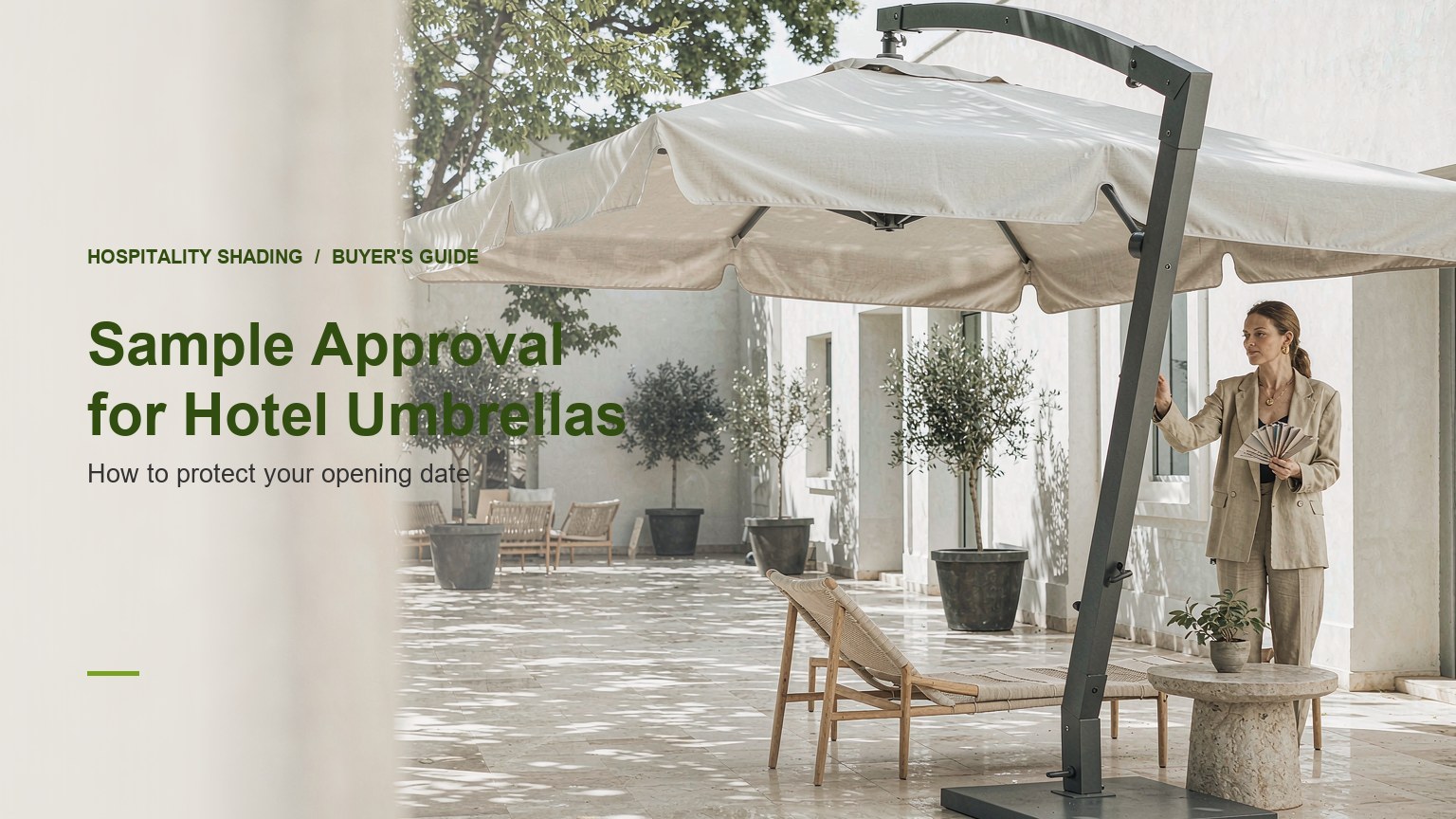
A hotel terrace opens on a fixed date. The umbrellas are the last thing to arrive and the first thing guests notice. Yet the step that most often pushes an order past that date is not production or shipping — it is the sample. A colour that looks right on a screen reads wrong in afternoon light. A logo sits where the valance folds. A frame finish scuffs when the sample is handled. Each round of corrections adds days, and the second sample usually costs more time than the first. This guide is about making the first sample the one you approve: what to send, what to decide before it arrives, and how to build the approval stage into a schedule that still lands before opening.
Key Takeaways
- Sample approval is a schedule item, not a formality. Treat it as several weeks, not several days.
- Most resamples are caused by decisions left open — colour, print placement, or finish — not by a supplier making the wrong thing.
- Approve the materials as separate swatches before approving a full sample. It is faster and cheaper to reject a swatch than a finished umbrella.
- A written, signed-off sample is the reference for the whole order. Without one, "as approved" means different things to each side.
- Start the approval clock against your opening date, working backwards, not forwards from today.
Why the sample stage decides the delivery date
Production is the predictable part. Once a specification is locked, a factory can plan a line slot and a dispatch date with reasonable confidence. Sample approval is not, because it depends on human judgement under conditions nobody controls: the light in your lobby, the exact fabric against the stone, the print at the size it will actually be seen. That is where the schedule slips.
A typical sequence looks like this: you send an enquiry with a rough spec; the supplier proposes a configuration; a sample is made and shipped; someone on site looks at it and asks for a change; a second sample is made and shipped; then production starts. The two sample shipments alone can consume the same number of weeks as the entire production run. If the first sample had been decided properly, the second would not exist.
This is why the honest answer to "how long does a sample take" is two numbers: the time to make one, and the time to approve it. Buyers who plan for only the first number are the ones who discover the gap in week nine. Placing the enquiry in the right season helps as well — our note on why November and December are the smartest months to place a 2027 outdoor order explains the lead-time side of the calendar.
Decide these before the sample is made
A sample is a tool for confirming decisions, not for making them. Send these five items with the request and you remove most of the reasons a sample comes back rejected. The high-end umbrella customisation manual is a useful reference while you work through them.
1. The exact use, zone by zone
"Umbrellas for the terrace" is not a specification. A pool deck in full sun, a restaurant terrace used at night, a beach bar in salt air and a rooftop with wind exposure need different frames, bases and fabrics. Map the order by zone first, then request a sample for the zone that is hardest to get right. Our hospitality shading solutions page sets out how those zones differ, and the hotel and resort specification guide works the same ground from a site survey outwards.
2. Fabric by name, weight and colour reference
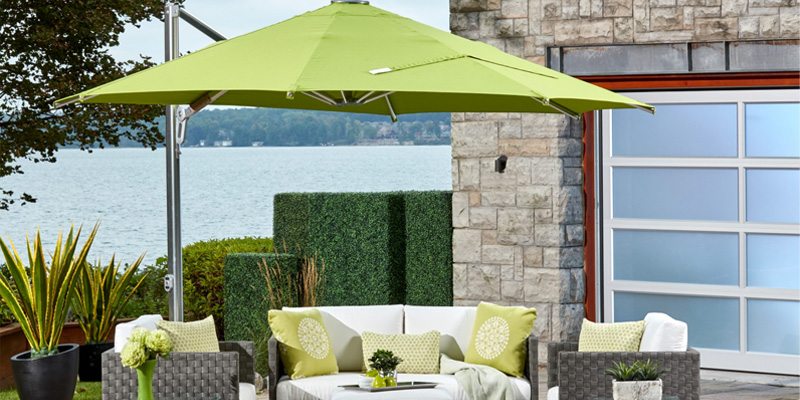
Ask for the fabric composition and weight in writing, and choose the colour against a physical swatch held in the light it will be used in. A screen image is not a colour reference. If you are choosing between solution-dyed acrylic and a coated polyester, read the umbrella fabric and colour customisation options before the sample request, plus the acrylic, polyester and olefin comparison, so the sample confirms a decision rather than opening one.
3. Print artwork at final scale
Logo placement is the most common source of a second sample. A mark that reads well on an artwork file can land across a fold, disappear into a patterned canopy, or sit too close to the valance seam. Supply vector artwork, state the placement you want in millimetres from a named edge, and ask for a printed proof before the sample is sewn. See how umbrella logo branding is applied across different canopy constructions, and how hotels and restaurant groups brand their parasols in practice.
4. Size, shape and mechanism
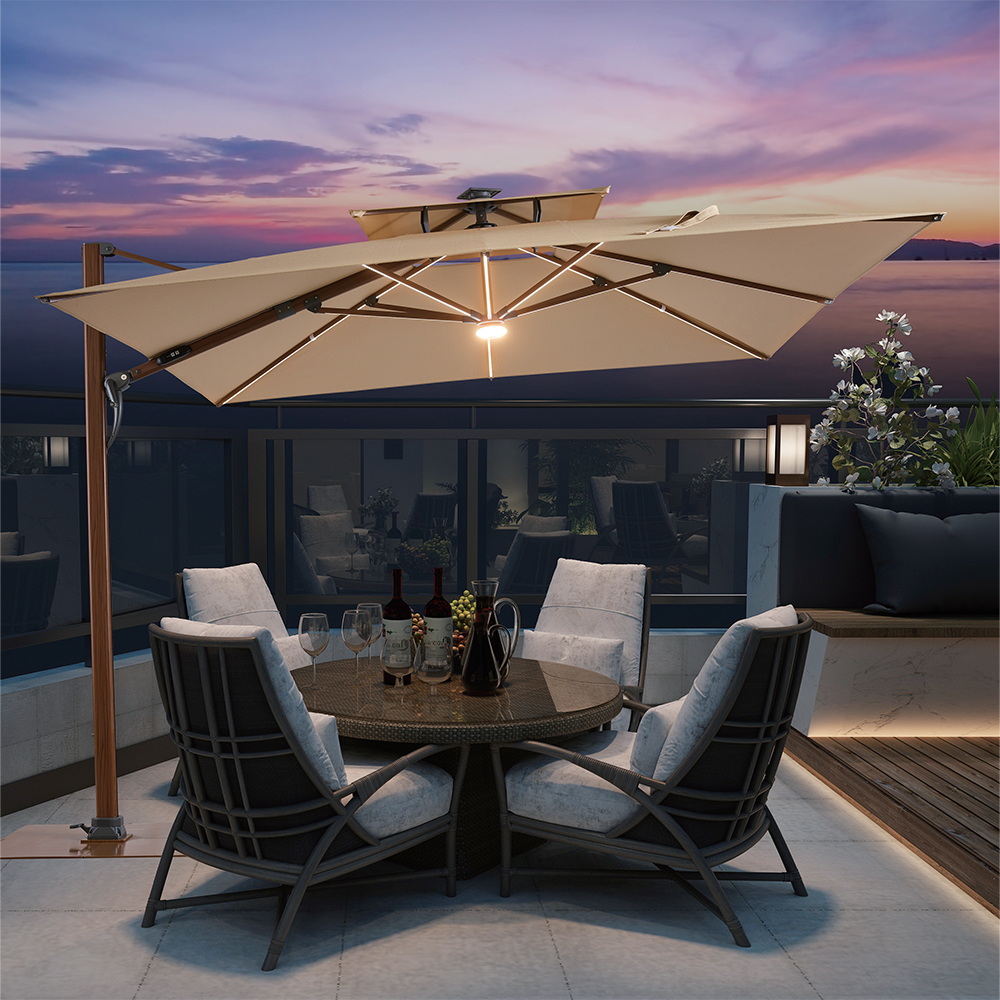
Confirm the canopy footprint and the opening mechanism before sampling. A gas-assisted opening, a crank, and a push-pull operation change how the umbrella feels to staff and how it is photographed for approval. The size and shape customisation and frame structure pages describe what is actually variable, so you are not asking for a one-off that the product line cannot support. If the choice is between an offset and a centre pole, the cantilever versus centre pole comparison is worth reading before the sample is built.
5. The base and the fixing
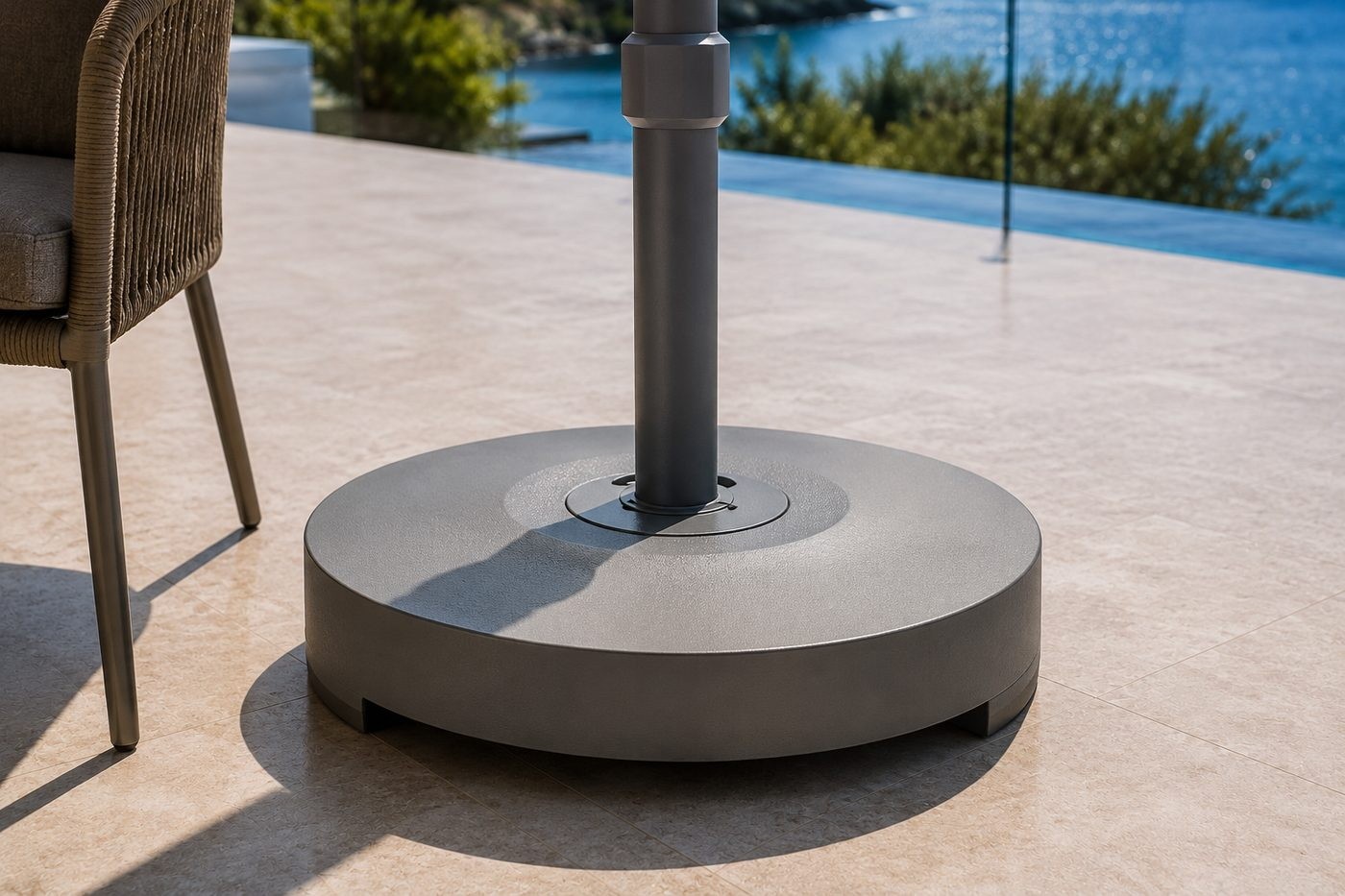
An umbrella sample without its base is only half a decision. Confirm which base and anchoring the sample represents, especially for a cantilever or a wind-exposed deck. The base and mounting solutions guide covers the fit between pole, base and surface, and the base weight and pole fit guide covers the sizing logic behind it. Approving the canopy and discovering later that the base does not suit the deck is a schedule mistake, not a product mistake.
A realistic approval timeline, counted backwards
Work from the day the terrace must be ready, not from the day you start enquiring. A workable sequence for a custom hospitality order has five stages, each with a buffer.
| Stage | What happens | Where the time goes |
|---|---|---|
| Spec freeze | Zone map, fabric, print artwork, base and mechanism agreed in writing | Internal decisions; the longest stage if stakeholders are many |
| Swatch check | Fabric and frame-finish swatches reviewed in site light | Courier time plus one review meeting |
| Sample build | Supplier makes the sample to the frozen spec | Production queue; shorter when the spec is complete |
| Sample review | Site sign-off, or one documented round of changes | The stage that expands when decisions were left open |
| Production & freight | Bulk run, inspection, packing, sea freight | Line slot plus transit; plan a margin for both |
Freeze the spec before the sample, and freeze the sample before production. Skipped stages do not disappear; they turn up later, usually in the week before opening when there is no room to absorb them. The MOQ guide also covers the sample and trial-order routes, which matter if you are deciding whether a paid sample leads into a mixed container or a full programme.
What to check when the sample arrives
Give the sample ten focused minutes with a checklist, rather than an afternoon of general impressions. Five checks cover almost everything that causes a resample.
- Colour in site light. Put the canopy beside the stone, timber or paint it will sit against, at the time of day the terrace is busiest.
- Print at viewing distance. Read the logo from where a guest stands, not from arm's length. Check it against a fold and a seam.
- Frame finish and hardware. Handle the pole and ribs. Look at the joints, the fixings and the edge of the coating, not only the flat surfaces.
- Mechanism under load. Open and close it the way staff will. A mechanism that is stiff on a sample is worse on a unit used every morning.
- Base and fixing fit. Confirm the pole drops into the base you plan to use and that the fixing suits the surface.
Write the result down. "Approved with note: print moved 20 mm from valance" is a useful instruction. "Looks good, maybe a bit bright" is a resample waiting to happen. If the site is exposed, it is also worth checking the test report behind a wind rating at this stage, so the finish you approve is the one the rating describes.
How to avoid the second sample
Second samples are rarely about a supplier getting the product wrong. They are about information arriving late. Three habits remove most of them.
Approve the parts before the whole. Fabric swatch, frame finish chip and a printed proof can be agreed separately and quickly. A full umbrella built around a colour nobody has signed off is a gamble. This is also cheaper: a swatch rejected costs a courier, a finished sample rejected costs a build and a shipment.
One named approver. If the designer, the operations manager and the owner all review the sample separately, you will receive three different answers. Name one person who signs off, and give that person the checklist above.
Keep the approved sample. Label it, photograph it from several angles, and keep it on site. It is the reference for the bulk order and for any replacement canopy ordered two seasons later — the spare parts and replacement canopy guide shows why that reference matters. Without it, "as per sample" is a phrase with no fixed meaning.
Where sample approval meets the rest of the order
The sample is one link in a chain that includes specification, production, inspection, freight and the after-sales commitment. For the evidence pack around the supplier decision, the eight questions buyers ask before approving a supplier and the fire-retardant compliance guide are useful companions.
Once the sample is signed off, the after-the-quotation checklist covers what needs to be in writing. The umbrella, furniture and kitchen FAQ collects the recurring questions, and the quotation request is where a frozen specification turns into a dated production slot. Our warranty terms page sets out what is covered once the order is in service.
None of this is paperwork for its own sake. A signed sample and a dated schedule are what let a purchasing team tell the hotel manager, with confidence, that the terrace will be ready on the day it is promised.
Frequently asked questions
Can a supplier skip the sample for a repeat order?
Only if the specification is genuinely unchanged and you still hold the approved sample. Reordering the same model in a different colour is a new decision, not a repeat. Fabric dye lots can shift slightly, so keep the original swatch as the comparison.
Is a paid sample normal for a custom order?
For a built-to-specification sample it is common, because the supplier is making a one-off to your configuration. Ask whether the sample cost is credited against the bulk order, and get that in writing before paying.
How many samples should we budget for?
Plan for one and prepare for two. If the first sample is built from a frozen spec and approved parts, a second should be the exception. Budgeting time for one revision protects the opening date without assuming the supplier will get it wrong.
What if the sample arrives after our inspection date?
That is a schedule problem, not a quality problem, and it is fixed at the front of the process. Agree the sample build time and the courier method when you enquire, and count the approval stage backwards from the date the terrace must be open.
Do we need a sample for every zone in the order?
Usually not. Sample the zone where the decision is hardest to reverse — often the print on the restaurant terrace or the finish on the pool deck. Zones using an existing, already-approved configuration can reference that approval instead.
Related reading
- Planning Outdoor Shade for Hotels and Resorts: A Step-by-Step Specification Guide
- Commercial Umbrella Fabrics Compared: Acrylic, Polyester and Olefin Canopies
- Cantilever vs Center Pole Umbrella: Which Fits Your Hotel Pool Deck?
- Commercial Umbrella Procurement: 8 Questions Buyers Ask Before Approving a Supplier
- After the Quotation: What Commercial Outdoor Furniture Buyers Need in Writing
The short version
Sample approval is where a hotel shade order either holds its opening date or quietly loses three weeks. Freeze the specification first, approve fabric, finish and print as separate parts, name one person to sign off, count the timeline backwards from opening, and keep the approved sample as the reference for the whole order. Do that and the first sample is usually the last one.