Commercial Umbrella MOQ Explained: 20 Pieces, 50 Pieces or a Container
- Share
- Issue Time
- Oct 19,2026
Summary
What the minimum order quantity really is on a commercial umbrella line: stock models from 20 to 50 pieces per model, custom canopy colours from 50 per size, a full custom programme from one 20 foot container, and furniture quoted against a 40HQ. Includes mixed loading, branding minimums, sample and trial order routes, and the mistakes that make a first order expensive.
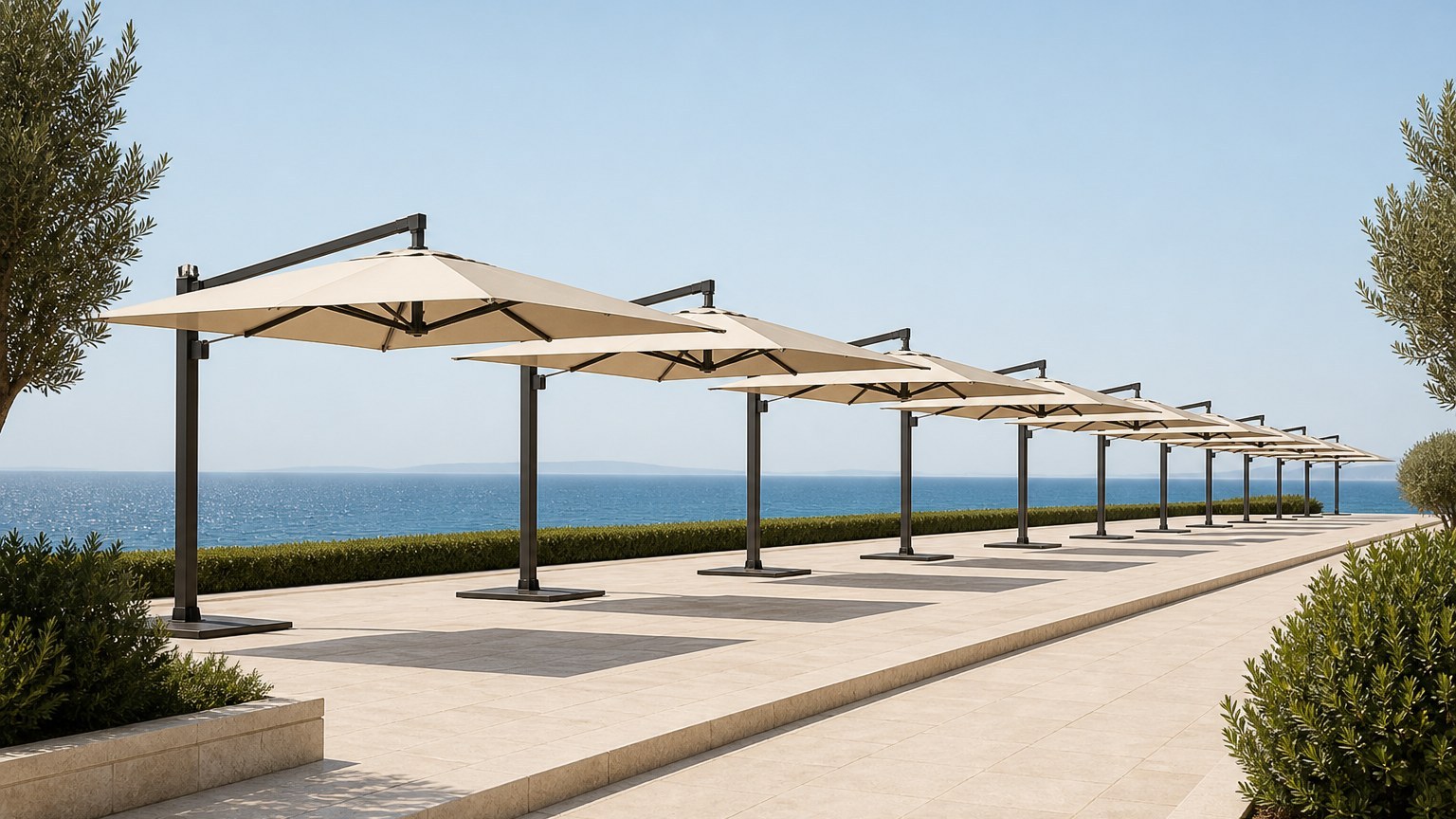
Minimum order quantity is the first number a buyer asks for and the last one that gets explained properly. The answer on our line is not a single figure: stock catalogue umbrellas start at 20 to 50 pieces per model, a custom programme usually starts at one 20-foot container or an agreed mixed load, and furniture is quoted against a 40HQ because that is where the packing economics work. This guide sets out what each tier really contains, why the numbers are what they are, what raises a minimum and what does not, and how to place a first order without overcommitting.
The short answer
Stock catalogue umbrellas: 20 to 50 pieces per model, and mixed-model containers are accepted. Light customisation and custom canopy colours: a higher per-model minimum, with custom canopy colours starting at 50 pieces per size. Full OEM or ODM: a typical custom programme starts at one 20-foot container or an agreed mixed load. Outdoor furniture: normally one 40HQ container for the line, though a compact 4-piece dining set starts from 10 sets and a parasol base from 350 pieces. First orders can often be arranged below these figures as a trial, and a sample order sits outside the minimum entirely.
The rest of this page explains where those figures come from, because an MOQ that looks arbitrary is usually an MOQ that has not been explained. Once you see what the number is protecting, it becomes something you can plan around rather than argue with.
Why a minimum exists at all
An MOQ is not a sales tactic. It is the point at which a factory can run a line, buy material and print a carton without losing money on the setup. Three costs drive it.
Setup cost is the real minimum
Every model has a fixed cost before the first saleable unit exists: the cut programme for the canopy panels, the welding jig for the frame, the colour change on the powder line, the print screen for the valance. Spread that cost over 20 units and it dominates the unit price. Spread it over 500 and it disappears. This is why the same umbrella can be quoted at two very different prices depending on quantity, and why the second order is always cheaper than the first: the tooling is already carried.
Canopy fabric is bought by the roll, aluminium tube by the bundle, and both have a minimum cut. A run of 20 umbrellas uses a fraction of a roll, and the remainder is either carried as stock or written off. Factories that quote very low minimums are usually either carrying your colour as dead stock or charging you for the offcut.
Cartons are printed in runs, and a container is planned as a loading diagram. One model at one quantity fills that diagram efficiently. Twenty models at ten pieces each does not, and the wasted volume shows up as freight per unit. This is the reason the furniture line quotes against a full container rather than a piece count.
The three tiers on our line
The minimum moves with how much of the product you are changing. It is useful to think of three tiers rather than one number.
Tier 1: stock catalogue, 20 to 50 pieces per model
A stock model in a stock colour needs no new tooling, no colour change and no print setup. The only question is whether the run fits the production schedule, so the minimum is low: 20 to 50 pieces per model depending on the frame size and fabric.
At this tier you are choosing from what already exists. Sizes, frame finishes and canopy colours come from the catalogue, and the only decision left is quantity and destination.
Tier 2: light customisation, higher per-model minimum
Change the canopy colour to a specific Pantone, add a logo to the valance, or specify a non-standard frame finish, and the run now carries setup. The minimum rises because the setup has to be paid for somewhere.
Custom canopy colours start from 50 pieces per size. Logo printing is available from a low minimum and can sit on one panel, all panels, or as a valance band.
Tier 3: full OEM or ODM, one 20-foot container or an agreed mix
A new size, a new frame profile, a co-developed design, or your own packaging takes the project out of catalogue production entirely. At this point the minimum is expressed in containers rather than pieces, because the line is being set up for you.
A typical custom programme starts at one 20-foot container or an agreed mixed load. That is not a hard wall. It is the point at which a dedicated run becomes economic for both sides.
| Tier | What changes | Typical minimum | What it covers |
|---|---|---|---|
| Stock catalogue | Nothing but quantity | 20 to 50 pcs per model | Catalogue sizes, stock colours, stock packaging |
| Light customisation | Colour, logo, finish | Higher per-model minimum; canopy colours from 50 pcs per size | Custom Pantone, valance or panel print, frame finish |
| Full OEM or ODM | Size, profile, design, packaging | One 20ft container or agreed mixed load | New tooling, custom cartons, private label, co-development |
Mixed containers: how one shipment carries several models
The most common objection to a per-model minimum is that no single model justifies the quantity. This is where mixed loading matters.
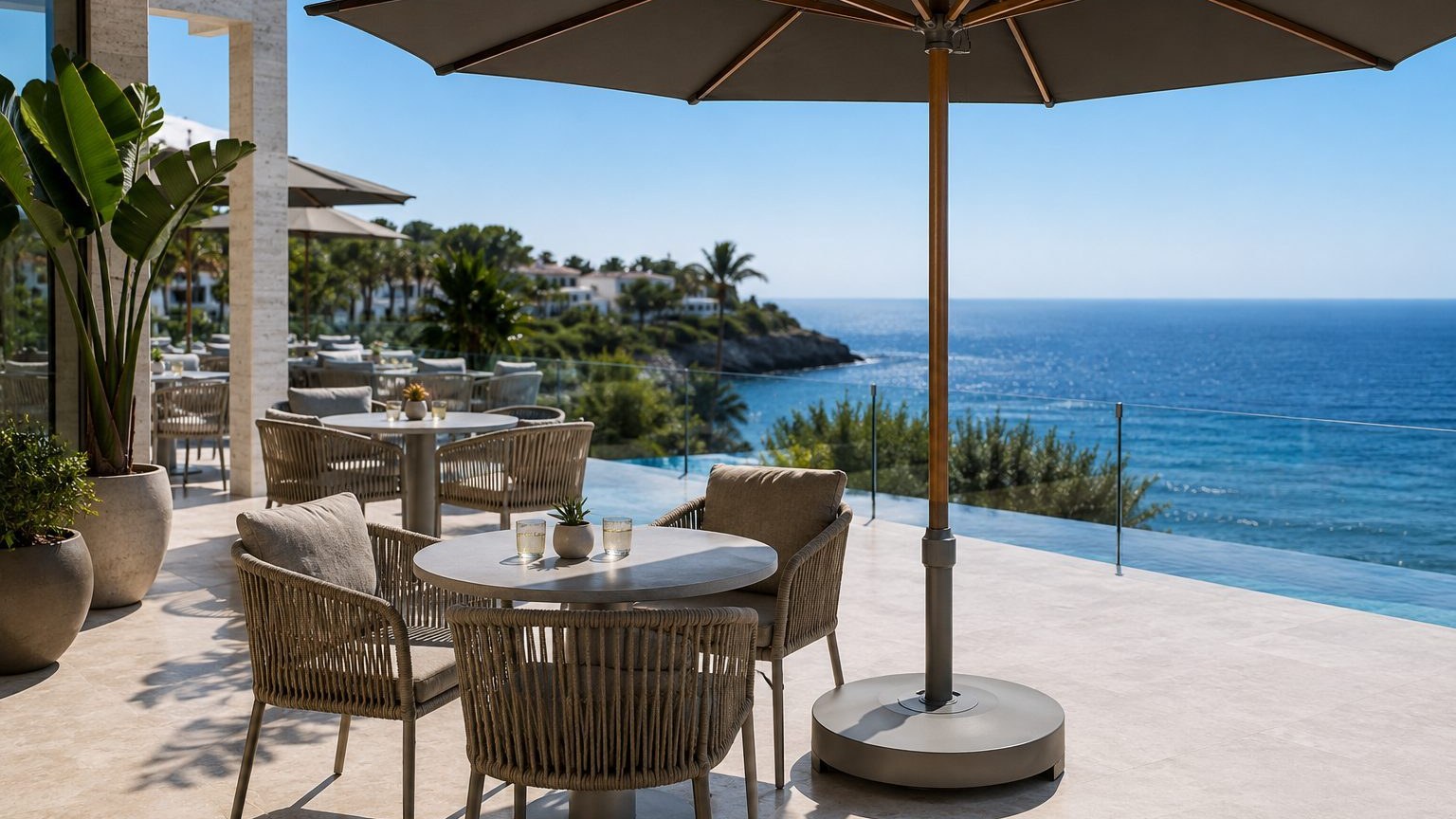
We accept mixed-model containers, so one container can combine umbrellas, bases and furniture. A hotel that needs 30 cantilevers for the pool deck, 40 centre poles for the restaurant terrace and 20 bases can ship them together rather than committing to a single model.
The practical rule is that the container, not the model, is the unit of planning. Once the total fills a container, the per-model quantities can be modest. What you cannot do is ship a mixed load so thin that the container is half empty: the freight per unit then rises above what the stock tier would have cost.
Worth knowing before you plan: bases are heavy and dense, umbrellas are bulky and light. A mixed load is easiest to balance when the two are combined, because the bases fill the weight and the umbrellas fill the volume.
Furniture works differently: the 40HQ rule
Furniture is quoted against a full container because the packing is the product. A chair that ships assembled wastes volume that a knocked-down chair recovers, and the difference is large enough to change the landed cost per unit by a wide margin.
On several lines the minimum works out exactly to one 40HQ:
| Line | Minimum per 40HQ |
|---|---|
| Adjustable back armchair | 360 chairs |
| Extendable table | 160 tables |
| Corner sofa set | 56 sets |
| 6-piece corner set | 52 sets, shipped as two 40HQ loadings of 26 sets each |
| Compact 4-piece dining set | From 10 sets |
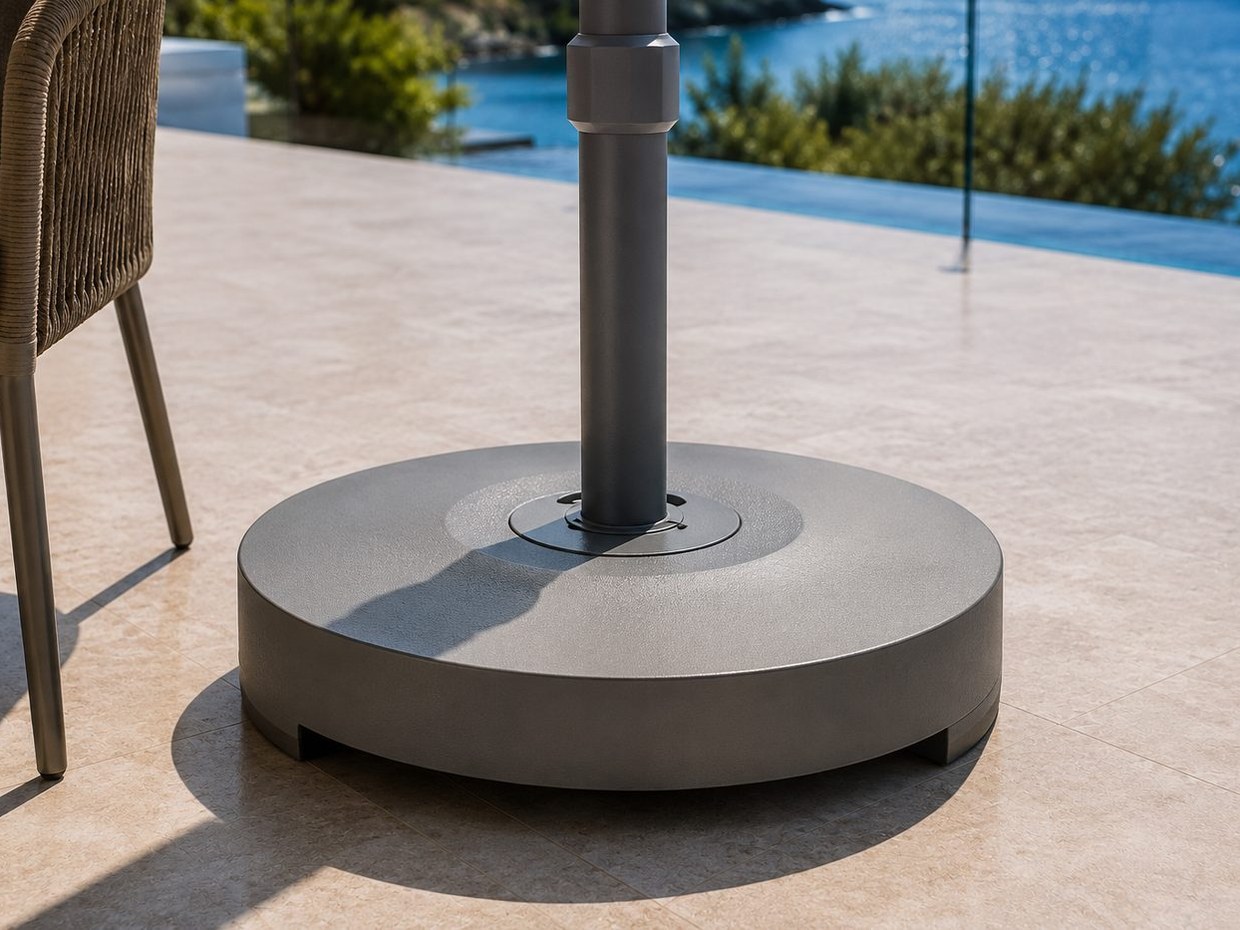
| Parasol base | From 350 pcs |
Two items on that list sit deliberately below a container. A compact 4-piece dining set starts from 10 sets and a parasol base from 350 pieces, because both pack densely enough that a part container still makes sense.
The reason the container is the unit is not policy. At one container, the loading plan, the carton schedule and the freight cost all line up, so the per-set landed cost is at its lowest. Below a full container we quote mixed loading instead, which is a different calculation rather than a refusal.
What raises a minimum, and what does not
Buyers often assume every request raises the bar. In practice only three things do.
Fabric and colour
A stock fabric in a stock colour is the cheapest thing you can order. A custom Pantone on the canopy is the single most common reason a minimum moves, because the dye lot has to be run and the roll has to be bought.
Logo and printing
Printing adds setup, but it is the smallest setup in the whole process. A single-colour logo on a valance band is cheap to set up and available from a low minimum. A multi-colour print across canopy panels is a different job and prices accordingly.
Tooling and new sizes
New tooling is the expensive tier. A new frame profile or a size that does not exist in the catalogue means a jig, a cut programme and a first-article inspection. This is the only category where the minimum is genuinely about amortising a capital cost.
What does not raise a minimum: changing the destination port, splitting a container across several models, requesting a different carton marking within the agreed print run, or asking for a certificate pack alongside the order.
Branding minimums in practice
For hotels, restaurants and resorts, branding is usually the whole point of the order. The mechanics are worth setting out precisely.
Logo printing on canopy panels and valances is available from a single colour. Custom canopy colours start from 50 pieces per size. Many hospitality clients print the venue name on the valance band, which has a practical advantage: it stays visible when the umbrella is closed, so the branding works even on a rainy morning.
Panel printing suits a larger logo that reads across a terrace. Valance printing is subtler and visible from every side. Both use screen printing or digital heat transfer, and both need artwork in AI, EPS or PDF vector format with Pantone or HEX references.
The approval sequence is a digital proof, then a physical swatch, then production. Printed canopies normally run in the same lead time as plain stock, with a few extra days for proofing on a first order.
One point that saves a lot of back and forth: keep the artwork on file. Reorders then stay consistent across seasons, which matters more than most buyers expect, because a second batch printed from a re-drawn file rarely matches the first exactly.
Samples and trial orders
There are two ways to reduce the risk of a first order, and they are often confused.
A sample order is a single unit bought to evaluate build quality, colour and fabric. It sits outside the MOQ entirely. We supply samples, production takes roughly 7 to 15 days, and the sample cost is usually deductible from your first bulk order. This is the right route when the question is "is this the right product".
A trial order is a small production run below the normal minimum, agreed case by case. It exists because the minimum is an economic threshold rather than a rule, and a first order sometimes needs to prove the market before it proves the maths. Trial quantities can often be arranged for first orders, and repeat orders then benefit from carried tooling and faster re-runs.
Use a sample when you are choosing. Use a trial order when you have chosen and want to test sell-through.
How to plan a first order without overcommitting
The failure mode with MOQ is not paying too much per unit. It is buying enough to hit a tier and then discovering the model was wrong for the site.
A sequence that avoids this:
- Fix the model on one terrace, not the whole property. Pick the site with the hardest conditions, usually the most exposed pool deck or the windiest corner, and specify for that.
- Order a sample of the shortlisted model in the intended fabric. Compare it against the terrace at the time of day the terrace is actually used.
- Convert to a trial quantity for that one site, and take the first season's feedback on shade coverage, base stability and how staff actually move the umbrellas.
- Scale to the full property on the repeat order, when the tooling is carried and the per-unit cost has settled.
The advantage of this sequence is that the second order is cheaper than the first on the same model, which is unusual in most purchasing categories and worth planning around rather than rushing.
MOQ and landed cost
The per-unit price falls with quantity, but the more useful number is landed cost per unit, and it behaves differently.
Two effects compete. Manufacturing setup is spread over more units, which pulls cost down. Freight per unit depends on how efficiently the container is filled, which is why a quantity that fills a container cleanly beats a slightly larger quantity that leaves a gap.
This is the practical argument for the 40HQ rule on furniture and for mixed loading on umbrellas: the target is not the largest possible order, it is the order that fills the container without stranding volume or weight capacity.
A worked example makes it concrete. A buyer comparing 300 and 400 of the same chair will usually find the 400 quoted lower per unit and assume the larger order is better value. If 360 fills a 40HQ and 400 requires a second container for 40 units, the 400 order carries a full second freight bill for 40 pieces, and the landed cost per unit rises sharply. The cheaper number was 360.
This is also why an MOQ quoted per container is not a negotiating position. It is the point at which the freight maths stops punishing you.
MOQ by product family: what changes is the container, not the minimum
It is tempting to assume a large cantilever carries a higher minimum than a small centre pole. It usually does not. The stock tier applies across the line at 20 to 50 pieces per model, and the family you choose changes something else: how much space each unit takes in a container, and therefore how quickly a mixed load fills.
A centre pole umbrella packs as a pole, a frame and a folded canopy. A cantilever packs with a heavier mast, a longer arm and a counterweight or base plate. An LED umbrella adds a wiring loom and a driver. The unit count that fills a container falls as the frame gets bigger, but the per-model minimum does not move with it.
Two practical consequences follow.
First, a terrace that mixes families is easier to load than a terrace that uses one large family throughout, because the small units fill the volume the large ones leave. Second, when a buyer is close to a container and needs a little more volume, adding bases is usually cheaper than adding umbrellas, because bases are dense and small.
The exception is anything that requires new tooling: a size outside the catalogue, a new frame profile, or a design developed for your brand. That moves the project to the custom tier regardless of family, and the minimum is then expressed in containers rather than pieces.
How MOQ interacts with season and lead time
Quantity and timing compete for the same production slots. Understanding that relationship prevents the most common planning error, which is discovering in April that a June terrace cannot be delivered.
Production runs 25 to 40 days after deposit confirmation. A custom colour, custom branding or new tooling adds roughly 10 to 20 days. Ocean transit is another 20 to 45 days depending on destination. Add those and a custom order placed in March lands in May or June, which is late for a season that starts in May.
Peak season, spring and summer, extends timelines further because the factory is running at capacity. A stock order placed in the peak window can take longer than a custom order placed off-season.
The practical rule is to place orders two to three months before the season opens, and to place custom orders earlier still. This is not a sales pressure tactic: it is arithmetic on the three time components above.
There is a quantity angle too. Large orders are scheduled across several production runs, so the last container of a large order ships later than the first. If a property opens in phases, splitting the order by phase rather than ordering everything at once usually delivers better, because each phase arrives when it is needed instead of sitting in a warehouse.
When the minimum is not the real constraint
For a first order, the MOQ is rarely the binding constraint. Something else usually is, and identifying which one changes the whole conversation.
Freight binds first on bulky, low-value items. A container of umbrellas is mostly air. If the order does not fill the volume, the freight per unit climbs faster than the manufacturing saving from a larger batch.
Weight binds on bases. A container has a payload limit as well as a volume limit, and concrete bases reach it before the volume is full. This is why a mixed load of bases and umbrellas is efficient: the umbrellas use the volume the bases leave, and the bases use the weight allowance the umbrellas leave.
Warehousing binds on seasonal businesses. Ordering a full year of stock to hit a better unit price only works if there is dry storage for it. Canopies stored folded in a damp warehouse for eight months are not the same product that left the factory.
Cash flow binds on first orders. A 30 percent deposit on a full container is a real commitment before a single unit has sold. A trial order exists precisely to keep that commitment proportionate to the evidence.
Site readiness binds more often than buyers expect. An outdoor kitchen or a terrace installation that is not ready cannot receive a container, and storage charges accumulate. The delivery date should follow the site, not the other way round.
The useful question is therefore not "what is your minimum" but "given my site and my season, what quantity makes sense to ship". Those are different questions and they have different answers.
How to read a quotation once you have one
An MOQ answer arrives as a quotation, and quotations are easier to compare when you know which lines carry the setup.
Check what the price is based on. A per-unit price without a quantity, an Incoterm and a finish is not comparable to anything. The same model can legitimately carry three different prices at three quantities.
Check whether tooling is included or amortised. On a custom run, the tooling cost is either a separate line or built into the unit price. Both are normal, but they behave differently on a repeat order: amortised tooling should disappear on the second order, and a separate line should not.
Check the base and the accessories. Bases, cover plates and fixing kits are frequently quoted separately because they ship as separate cartons. A quotation that looks cheap on umbrellas can be expensive once the bases are added.
Check the carton count. The number of cartons per unit drives the loading plan and therefore the freight. A model that ships one unit per carton and a model that ships two are not comparable on unit price alone.
Check the lead time against the season, not against today. A 25 to 40 day production window quoted in June lands in August. That is fine for a year-round resort and useless for a seasonal one.
Five mistakes buyers make on MOQ
Asking for the minimum before describing the site. The minimum depends on the model, the fabric and the finish. A number quoted without those is a guess. Describe the terrace first and the minimum follows.
Treating the per-model minimum as a per-order minimum. It is not. Mixed containers exist precisely so that several models can share one shipment. Buyers who do not ask about mixed loading often over-order a single model to justify a container.
Choosing the colour before choosing the model. Colour is the most common reason a minimum moves. Fix the model and the quantity, then decide whether the custom colour is worth the higher tier.
Skipping the sample to save time. Production runs 25 to 40 days after deposit, and a custom colour or new tooling adds roughly 10 to 20 days on top. A sample adds 7 to 15 days and removes the most expensive failure mode, which is discovering the fabric is wrong after the container ships.
Forgetting the base in the quantity. Bases are a separate line with their own minimum, starting from 350 pieces on the parasol base. A terrace plan that counts umbrellas but not bases ends up short. The difference between resin, water-filled and concrete bases, and how each affects stability and freight, is set out in our guide to umbrella base weights and pole fit.
Questions we get asked about MOQ
Can I order fewer than 20 pieces?
Not from the stock tier as a standard order, but a sample order is a single unit and sits outside the minimum. Between one and twenty, the usual route is a trial quantity agreed case by case. Tell us the site and the quantity you can commit to and we will say plainly whether it works.
Does the minimum apply per colour or per model?
Per model and finish, because that is what drives setup. A second colour on the same model needs its own dye lot, which is why custom canopy colours start from 50 pieces per size rather than from the stock figure.
Can I mix umbrellas and furniture in one container?
Yes. Mixed-model loading is accepted and one container can combine umbrellas, bases and furniture. It is usually the most efficient way for a hotel to place a first order, because the bases add weight and the umbrellas add volume.
What if I only need 12 umbrellas for one small terrace?
That is a sample or trial conversation rather than a catalogue order. For a single small terrace the honest answer is usually that the freight, not the MOQ, is the obstacle. We will tell you which route costs less rather than pushing the larger order.
Does a logo change the minimum?
It changes it less than buyers expect. Single-colour logo printing on a valance or panel is available from a low minimum. A multi-colour panel print or a custom frame finish is a bigger job.
How long does the first order take?
Production runs 25 to 40 days after deposit confirmation. Custom colour, branding or new tooling adds roughly 10 to 20 days. Production samples take 7 to 15 days. Ocean transit is another 20 to 45 days depending on destination, so a first custom order placed two to three months before the season is the safe planning assumption.
What payment terms apply?
Standard terms are 30 percent deposit by T/T to start production and 70 percent before shipment, with L/C at sight available. Terms for large or repeat accounts are discussed case by case. The full terms, along with sampling and inspection, are covered in the frequently asked questions.
Can I inspect before shipment?
Yes. Third-party inspection before shipment and after arrival is supported. Inspection is usually arranged once the order is packed, so the carton count and the loading plan can be checked together.
What to send us for an MOQ answer
Four things let us give a real number rather than a range:
- The site. Hotel pool deck, restaurant terrace, rooftop or private villa. Exposure matters more than size, because wind decides the base and the frame.
- The models you are considering. A link or a model code is enough. If you have not shortlisted yet, describe the layout and we will narrow it.
- Quantity per model, and whether it is fixed or flexible. "40 for sure, up to 60 if the price works" is more useful than "50".
- What you want to change from catalogue. Colour, logo, size, packaging. Each one moves the tier, and knowing which ones are firm avoids a second round of quoting.
With those four, the reply is a specific quantity per model, the tier it falls into, and the lead time that follows. Without them, any number is a placeholder.
The takeaways
- Stock umbrellas start at 20 to 50 pieces per model, and mixed-model containers are accepted.
- Custom canopy colours start from 50 pieces per size, and logo printing is available from a low minimum.
- A full custom programme typically starts at one 20-foot container or an agreed mixed load.
- Furniture is quoted against a 40HQ because packing economics, not policy, set the number. Two lines sit below a container on purpose: a compact 4-piece dining set from 10 sets, a parasol base from 350 pieces.
- The minimum moves with setup, not with order value. Colour and tooling raise it. Splitting models across a container does not.
- Samples are outside the minimum and usually deductible from the first bulk order.
If you are planning a first order and the per-model minimum is the blocker, the fastest route is to send the site, the models and the quantity you can commit to. Most of the time the answer is a mixed load rather than a larger single order.
Tell us the terrace and the quantity
Send the site type, the models you are considering and the quantity you can commit to. We will come back with the exact minimum per model, the tier it falls into and the lead time, usually within one working day.
Related: Outdoor umbrellas | Large commercial umbrellas | Outdoor furniture | Project furniture solutions