Cantilever vs Center Pole Umbrella: Which Fits Your Hotel Pool Deck?
- Share
- publisher
- Foris Hortus
- Issue Time
- Oct 26,2026
Summary
A practical buyer's guide comparing cantilever and center-pole umbrellas for hotel pool decks, with a side-by-side table and links to commercial shade and furniture.
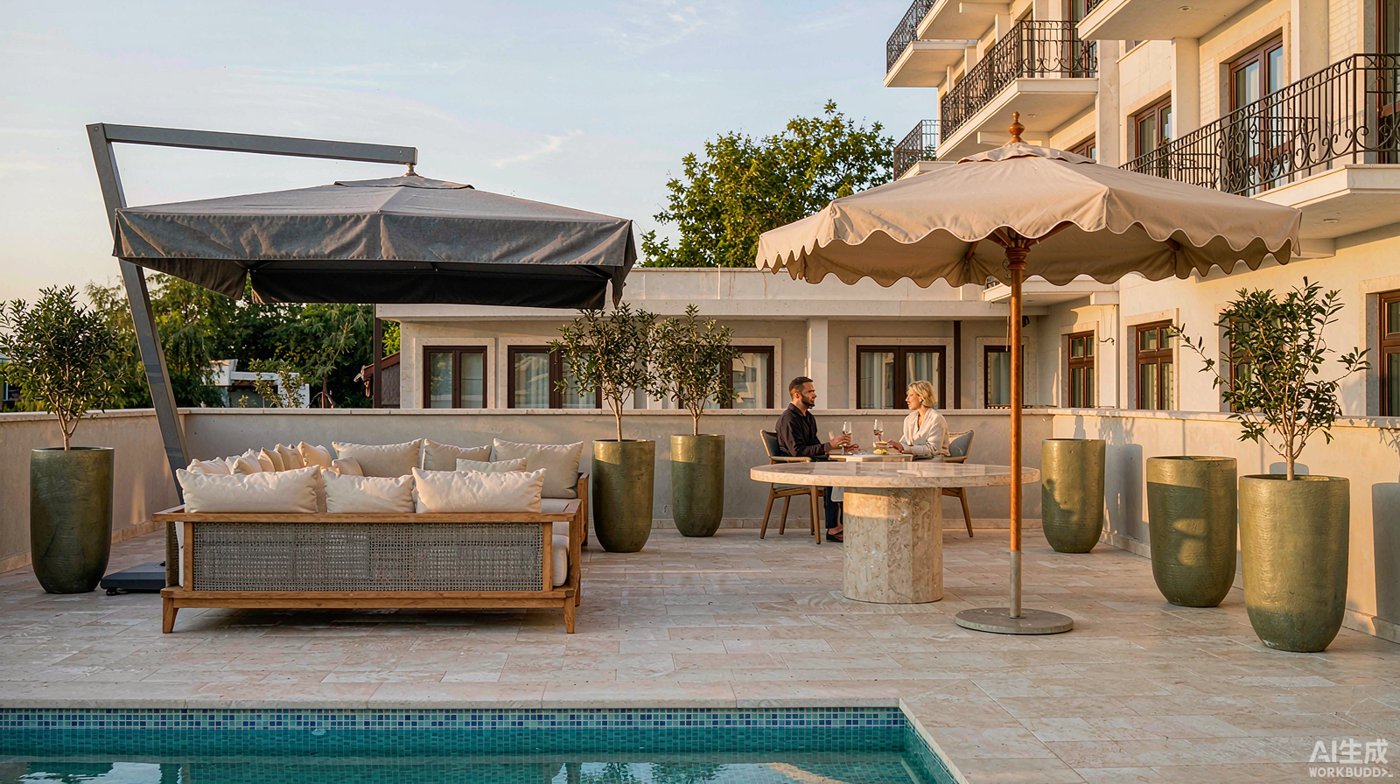
Choosing shade for a hotel pool deck is rarely just about covering square metres. The two silhouettes buyers weigh most often are the cantilever (offset) umbrella and the center-pole umbrella. They look similar from a distance, but they solve different layout problems — and picking the wrong one means lost lounger space, awkward sightlines, or a base where guests keep tripping.
This guide breaks down how each works, where it wins, and how to decide for a resort, poolside, or rooftop terrace.
What each style actually is
A center-pole umbrella carries its canopy on a single mast that runs through the middle of the shade. A cantilever umbrella moves that mast to the side and suspends the canopy on an angled arm, so the pole and base sit outside the shaded area.
Cantilever umbrellas: clear the floor, open the view
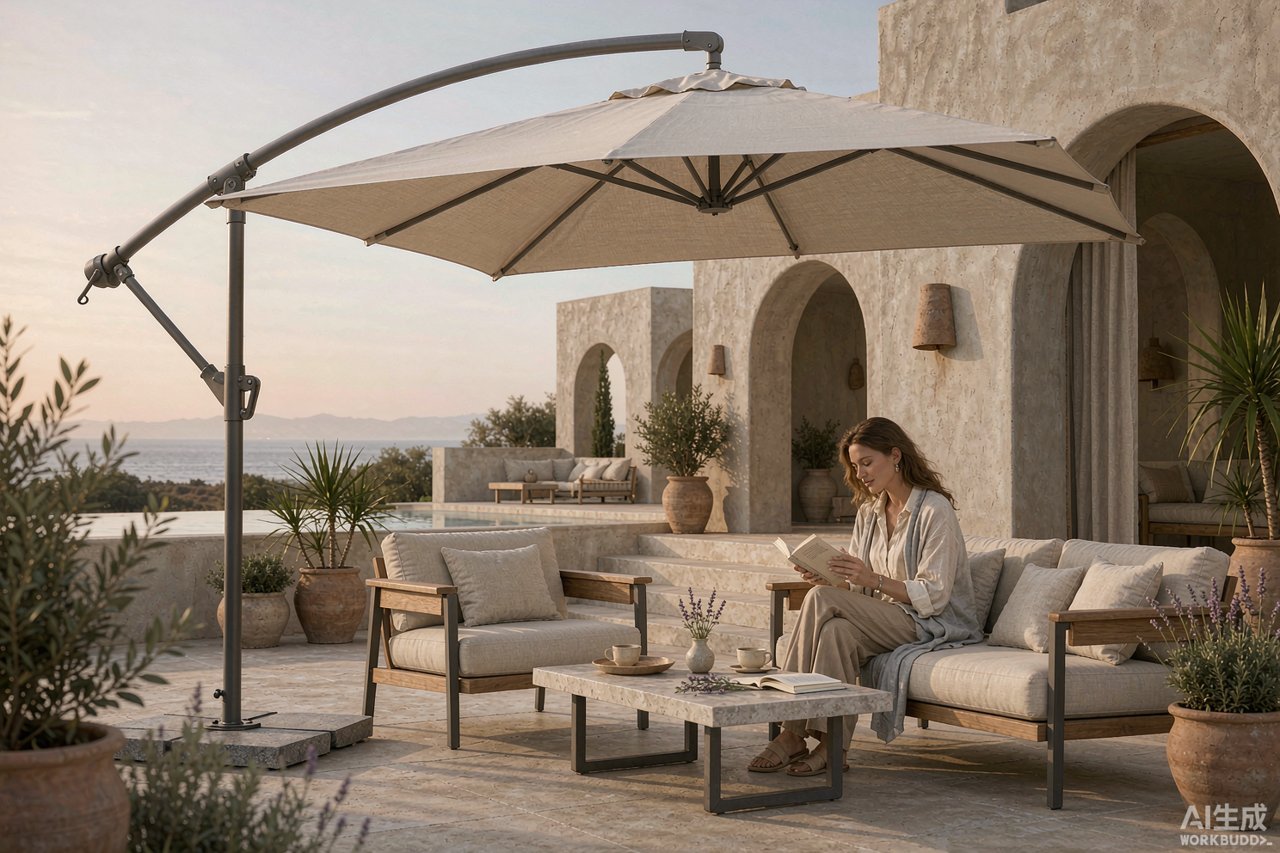
Because the support is offset, a cantilever throws shade exactly where you want it — over a lounge group, a spa bed, or a dining set — without a pole cutting through the middle of the furniture. That is why it dominates premium pool-deck and resort installations.
- Best for: lounge zones, spa decks, and anywhere you want an unobstructed sightline to the water.
- Trade-off: the side load needs a heavier base and a stiffer frame, so it costs more per metre of shade.
- Watch: always spec the right counterweight — see our 160 kg split-steel cantilever base.
Center-pole umbrellas: simple, robust, budget-friendly
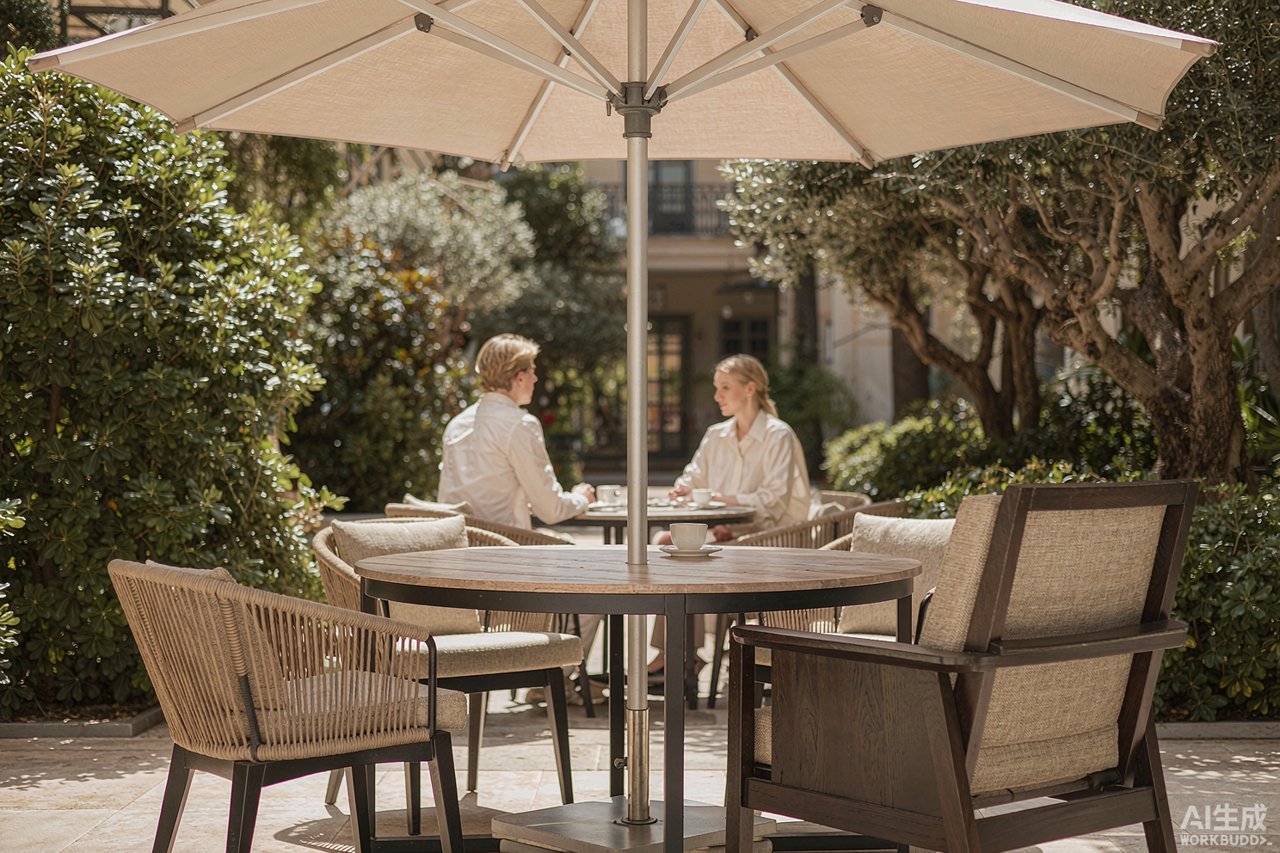
The center-pole design is the workhorse of cafés and terraces. The load path is straight down the mast, so the frame can be lighter and the price lower, while still standing up to daily commercial use. A 3.0 m round center-pole canopy seats four to six comfortably around a bistro or dining table.
- Best for: dining terraces, café patios, and high-turnover seating where the pole through the table is expected.
- Trade-off: the central mast occupies the table centre and blocks the view if used over lounge seating.
- Scale up: for large decks, a 3.4–5.5 m commercial Roman umbrella covers whole seating banks.
Cantilever vs center pole: side-by-side
| Factor | Cantilever | Center pole |
|---|---|---|
| Shade placement | Offset, fully flexible | Fixed at table centre |
| Floor space under canopy | 100% clear | Pole occupies centre |
| Sightline to pool | Open | Partial block |
| Frame cost | Higher | Lower |
| Base requirement | Heavy counterweight | Lighter / in-table |
| Best use | Lounging, spa, resort | Dining, café, terrace |
Which fits a hotel pool deck?
The short answer: use both. Most decks pair cantilevers over the lounge and spa zones with center-pole umbrellas over the dining and bar tables. If you must start with one, let the dominant activity decide — lounging and photography favour the cantilever; seated dining favours the center pole.
Pair the shade with the seating
An umbrella only works as part of a set. Our 5-piece round dining set (120 cm sunburst slat table with four rope-weave armchairs) is engineered to sit under a 3.0 m centre-pole canopy, and the standalone 120 cm round table plus rope-weave armchairs let you build the same look piece by piece.
Bring it together
Both silhouettes ship from the same aluminium-and-textile platform, so you can mix them across a property and keep one spare-parts list. For dimensions, wind ratings, and fabric options across the range, talk to our team — visit Foris Hortus for the full catalogue.