Patio Shade Options Compared: Umbrella vs Shade Sail vs Awning vs Pergola
- Share
- publisher
- Foris Hortus
- Issue Time
- Oct 21,2026
Summary
Compare the four main patio shade options - umbrella, shade sail, retractable awning, and pergola - on cost, coverage, wind, permanence, and the spaces each suits, with a scenario shortcut for buyers.
Why the First Shade Decision Shapes the Whole Space
A shaded patio is not a finishing touch. It is the difference between a deck that bakes in the midday sun and an outdoor room your guests actually use from breakfast to dinner. Before you compare brands or fabrics, you face a bigger question: what kind of shade structure do you want? Most buyers land on four options, and each one solves a different problem.
This guide compares the patio umbrella, the shade sail, the retractable awning, and the pergola on the five things that matter: cost, coverage area, behaviour in wind, how permanent the install is, and which spaces each one suits. By the end you will know not just what is available, but when a movable umbrella is quietly the smarter purchase.
The Four Options at a Glance
| Option | Typical cost | Coverage | Wind behaviour | Permanence | Best for |
|---|---|---|---|---|---|
| Patio umbrella | Lowest | One seating area | Moderate; close in storms | Movable, zero install | Dining sets, pools, balconies, cafes |
| Shade sail | Low per sq ft | Large fixed span | Good when tensioned | Semi-permanent anchors | Open patios, playgrounds, pool decks |
| Retractable awning | Mid to high | Wall-adjacent | Moderate; retract before wind | Mounted to structure | Terraces against a wall, shopfronts |
| Pergola / gazebo | Highest | Defined room | Excellent (fixed) | Permanent architecture | Resort upgrades, villas, permanent rooms |
1. Patio Umbrella: The Flexible First Choice
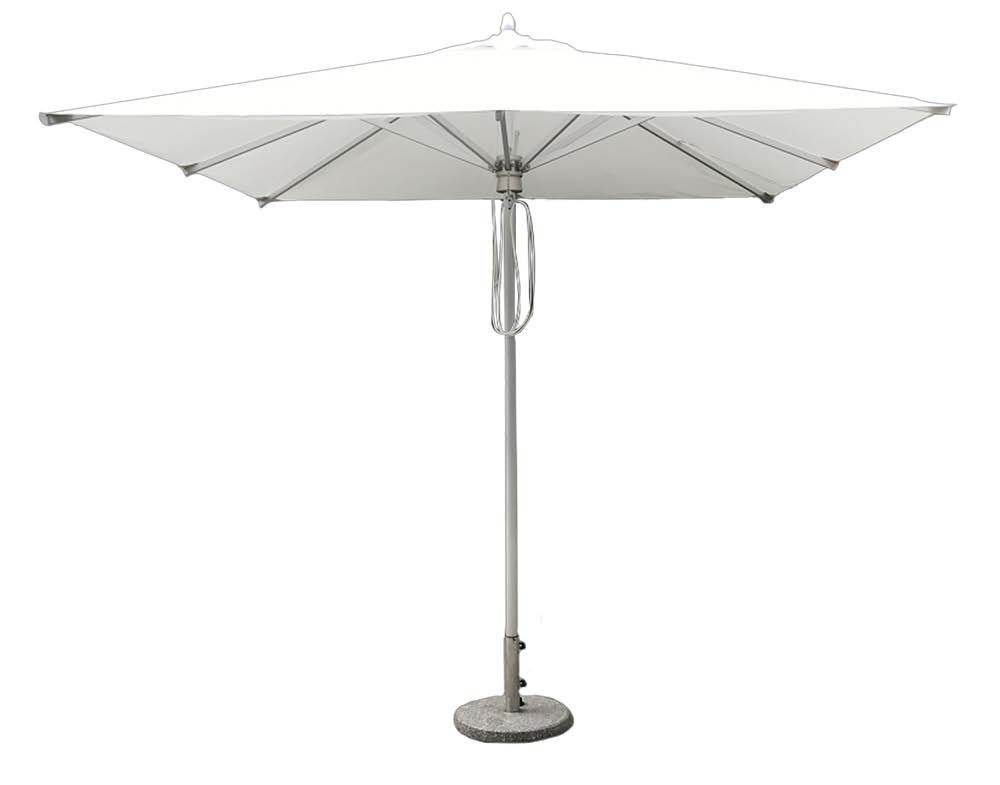
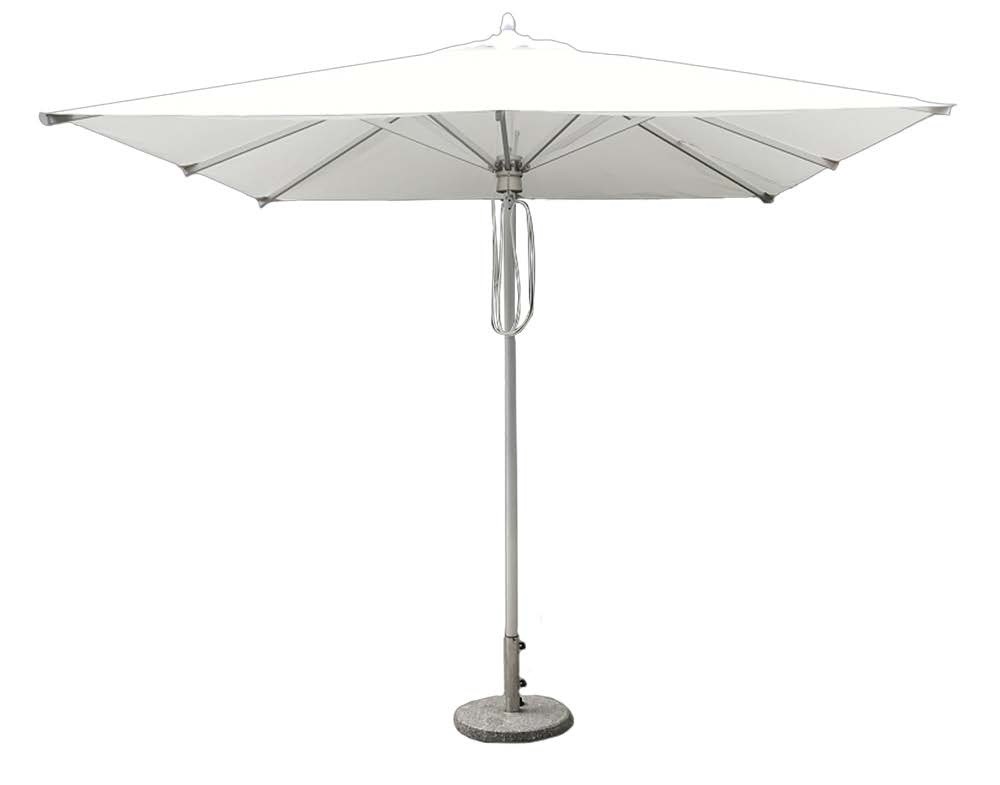
The patio umbrella remains the default first shade purchase for good reason. It costs the least, needs no installation, and moves wherever the sun or the furniture goes that day. Within the category there are two main builds: the center-pole (market) umbrella, which drops through a table hole for classic stability, and the cantilever (offset) umbrella, which pushes the canopy out on a side arm so nothing blocks the seating beneath it.
What it does best: instant, movable shade for a dining set, a pool deck, a balcony, or a restaurant terrace. Renters can use it without drilling. You can buy one in an afternoon and rearrange it next weekend.
Where it stops: a single umbrella shades roughly one seating zone, not a whole yard. It is also the least wind-tolerant of the four unless you spec a commercial-grade frame and a proper base. See our cantilever vs offset vs market comparison and the umbrella base selection guide before you size one.

2. Shade Sail: Wide, Architectural, Semi-Permanent
A shade sail is a piece of tensioned fabric pulled between anchor points: posts, a wall, or an existing structure. Done well, it reads as modern architecture and covers far more square footage per dollar than any umbrella.
What it does best: broad, breathable coverage over open patios, playgrounds, and pool decks that already have something solid to anchor to. Because the fabric is under tension rather than balanced on a single pole, a correctly installed sail handles wind better than a freestanding umbrella.
Where it stops: it needs real anchor points and is not something you fold away before a storm or slide to the other side of the yard. If your priority is flexibility, the umbrella wins. If your priority is one large, fixed, good-looking canopy, the sail is hard to beat.
3. Retractable Awning: Shade on Demand
An awning mounts to a wall or a freestanding frame and extends over the patio on demand, then retracts when you want full sun or need to clear it before weather. Motorized versions make this a one-button operation.
What it does best: spaces that sit against a building, where you want shade at noon but sun in the morning, plus protection for windows and doors. Installed cost typically runs from the low hundreds into several thousand depending on size, fabric, and motorization.
Where it stops: it is useless for an open deck far from a wall, and it is the second-most expensive option after a pergola. You are also committing to a fixed mounting point.
4. Pergola and Gazebo: The Permanent Upgrade
A pergola is a framed structure, often topped with adjustable louvers, a fixed roof, or climbing plants. It is real architecture: it defines an outdoor room and, in most markets, adds genuine property value that a 150 dollar umbrella never will.
What it does best: permanent outdoor living spaces at high-end resorts, villas, and homes where the shade is part of the building, not an accessory. It also carries lighting, heaters, and vines.
Where it stops: it is the most expensive and most permanent choice, often needs permits, and is not moving once it is in. Many hospitality projects pair a pergola with movable umbrellas underneath, getting both the structure and the flexibility.
How to Choose: A Scenario Shortcut
- Small balcony or rental: a compact or half umbrella. No drilling, no commitment.
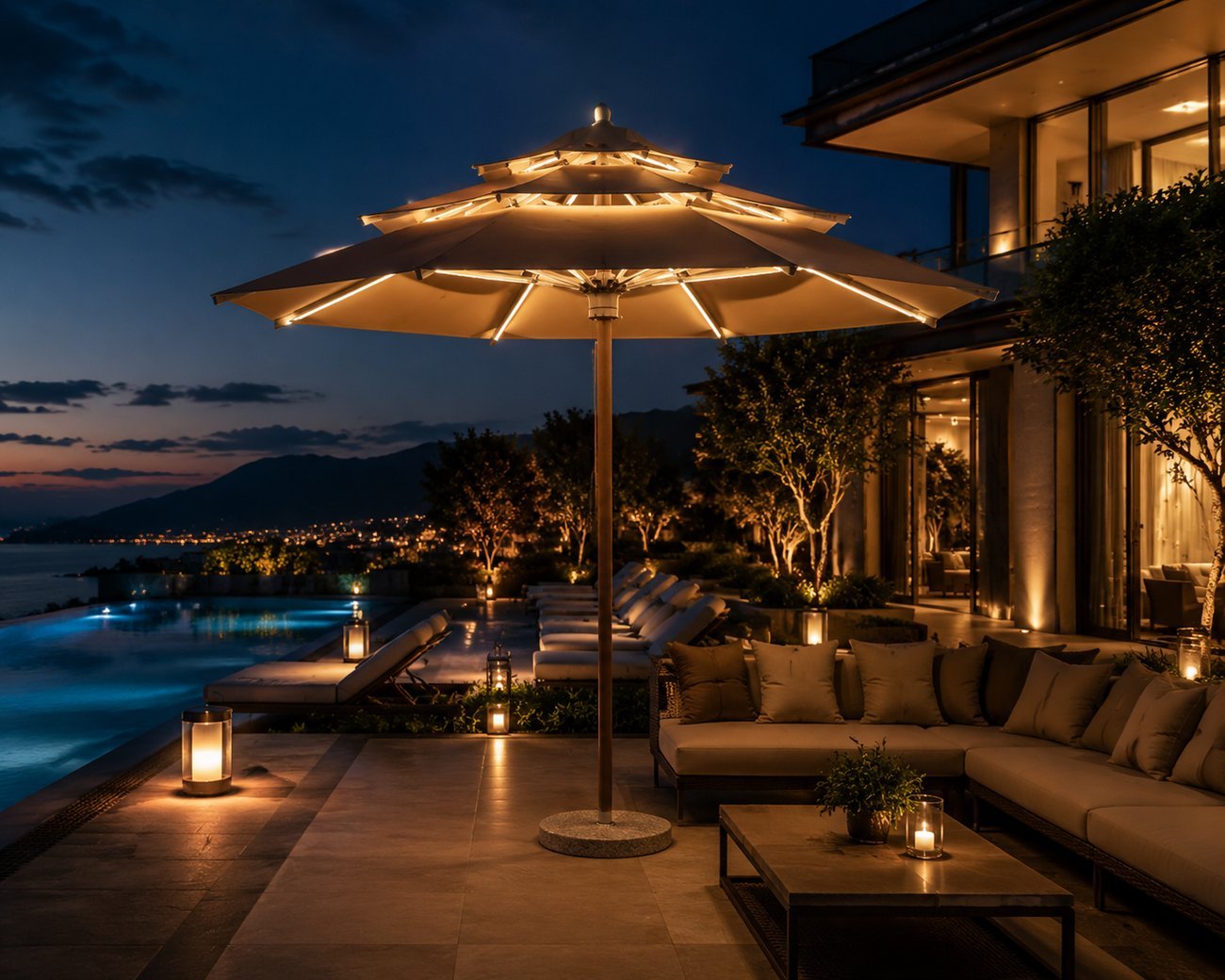
- Pool deck or hotel terrace: a cantilever umbrella for movable shade, or a tensioned sail for broad fixed cover.
- Terrace against the house: a retractable awning that follows the sun.
- Permanent resort or villa upgrade: a pergola, with umbrellas layered underneath for flexible zones.
- Windy or coastal site: a vented commercial umbrella on a heavy base, or a properly tensioned sail.
- Tightest budget, fastest result: a patio umbrella, full stop.
Why a Quality Umbrella Often Wins for Hospitality
For hotels, resorts, and restaurants, the shade that follows the sun and the furniture layout is usually worth more than any fixed structure. A pool deck that seats guests differently each season, a cafe that reconfigures for events, a rooftop that needs weight discipline: these are umbrella problems, not pergola problems.
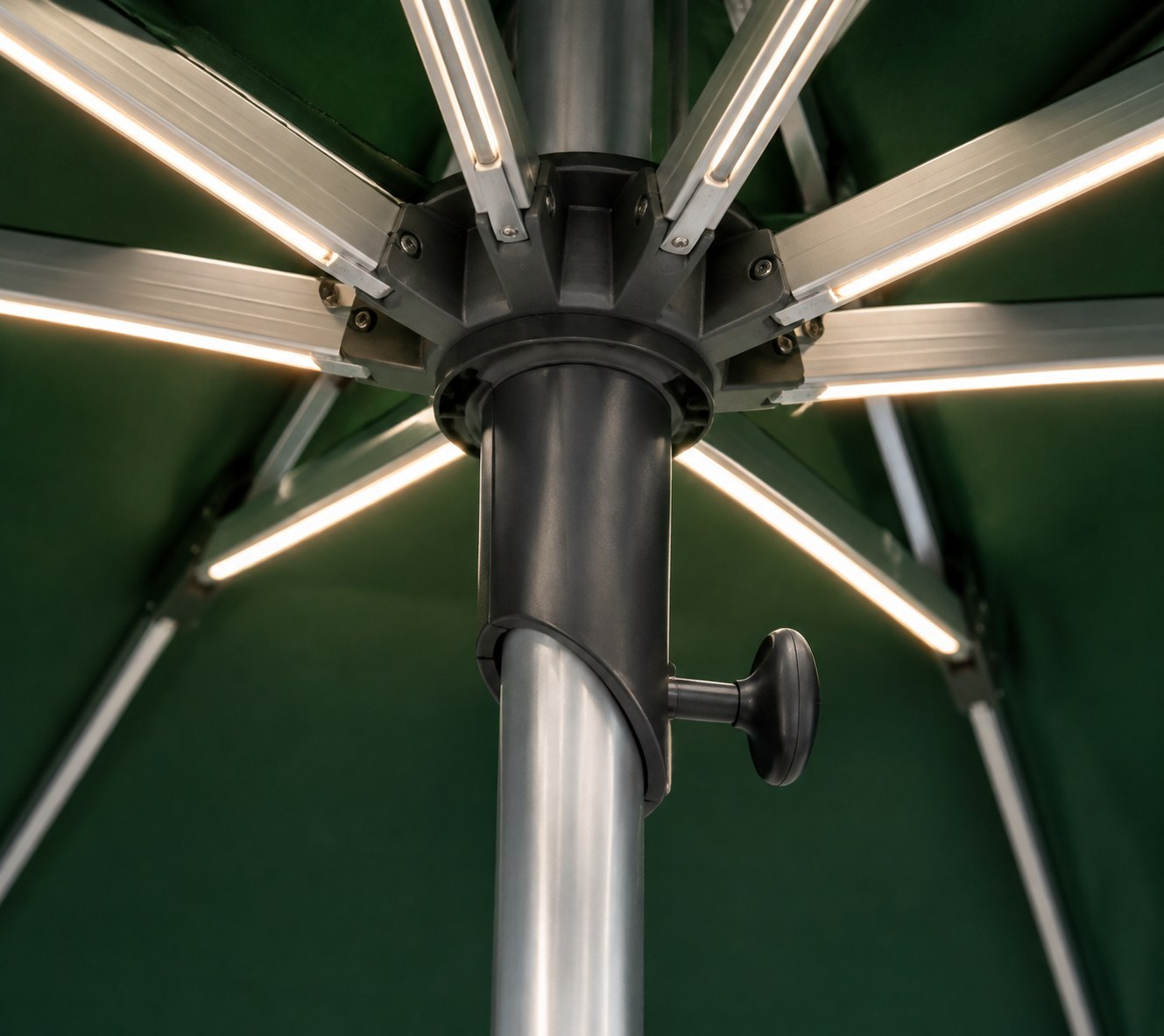
A commercial-grade umbrella earns its place with reinforced ribs, wind vents, crank and tilt mechanics, and canopies you can replace instead of binning the whole unit. Our care and maintenance guide shows how a well-spec'd umbrella runs for years, and our corporate parasol and printing guide covers branding for hotels and restaurants. Buying in volume? Our commercial umbrella MOQ explainer breaks down 20-piece, 50-piece, and container runs.
Quick Answers
Can an umbrella stay outside year-round? A commercial-grade model can stay out through a season, but close it in storms and store the canopy in the off-season to protect the fabric and frame.
Shade sail or umbrella for a windy yard? A properly tensioned sail, or a vented commercial umbrella on a heavy base. Both beat a lightweight market umbrella in a gust.
What is the cheapest shade? The patio umbrella, by a wide margin, and it is the only one that needs no installation.
Which option adds home value? The pergola, because it is structure. An umbrella is furniture, not an asset on the deed.
Spec your shade with Foris Hortus
We are a B2B manufacturer of commercial-grade cantilever, center-pole, and roman umbrellas for hotels, resorts, distributors, and design projects. Open the High-End Umbrella Customization Manual for materials, wind ratings, and branding options, or browse the full range to start a specification.